Cranks but will not start
With no spark or injector command, nothing happens.
Searching for ECM repairing near me in Bangalore? SNZ Auto Engineering Works diagnoses, repairs and programs engine control modules at our Wilson Garden workshop. We work on petrol and diesel cars, daily drivers to exotics, whose owners have been told the computer is dead. First we prove whether the fault is really the ECM or the wiring, sensors and grounds around it. Then we repair, program and test the module so the car runs properly again. Repaired, not replaced.
An ECM fault rarely announces itself. These are the symptoms that bring cars to our Bangalore workshop.
With no spark or injector command, nothing happens.
Stalling at idle or while driving, with no warning and no consistent pattern.
When an internal driver circuit fails and a cylinder loses fuel or spark.
A check-engine light with communication or internal-module codes. A strong ECM signal.
A module misreading sensors delivers the wrong fuel and timing.
Automatic transmissions rely on ECM data, so bad data means badly timed shifts.
The module, its power supply, its grounds or the wiring has a problem.
One symptom alone is not proof. Several together — especially no communication with a scan tool — make the ECM a serious suspect worth testing properly.
The ECM — engine control module, also called the ECU — is your car's engine computer. It reads sensors around the engine, including crank and cam position, air flow, throttle position and coolant temperature, then decides how much fuel to inject, when to fire the spark and how much boost to run.
It also shares data with the transmission module, ABS and instrument cluster, and works with the immobiliser to confirm the correct key before the engine starts. Because it sits at the centre of all this, a fault inside it can look like almost any other fault. That is why diagnosis matters more than replacement. ECM work sits alongside our full list of workshop services.
Engine control modules are sealed electronic units, but they live in a hot, wet, vibrating environment.
Water ingress is the biggest cause in Bangalore. Monsoon flooding, a blocked cowl drain or a leaking windscreen seal lets water reach the module or its connector, and corrosion spreads across the board. Voltage spikes do fast, hidden damage: jump-starting with reversed leads, a failing alternator or welding on the car can destroy internal drivers instantly.
Corroded connectors create intermittent signals, so the ECM gets blamed while the fault sits in the pins. Heat and vibration age the board, and failed capacitors and output drivers are common wear-out points. Wiring faults misdiagnosed as ECM failure are the most expensive mistake of all: a chafed harness or broken ground produces the same symptoms, and the same short can damage a new module.
We do not replace an ECM until we have proved it is the ECM. Diagnosis at our Wilson Garden workshop follows a set order.
First, the basics — battery condition, charging voltage, and the power and ground circuits feeding the module. A large share of "dead ECM" cars are ground or supply faults.
Second, the network and inputs. We check whether the module communicates, then compare live sensor data against what the engine is physically doing. If a sensor is lying, the ECM is only reporting the lie.
Third, the outputs — whether the module is commanding injectors, coils and relays. This separates a failed internal driver from a failed component downstream.
Fourth, the module itself, opened and inspected for water damage, corrosion, burnt tracks and failed capacitors. Only then do we call the ECM faulty.
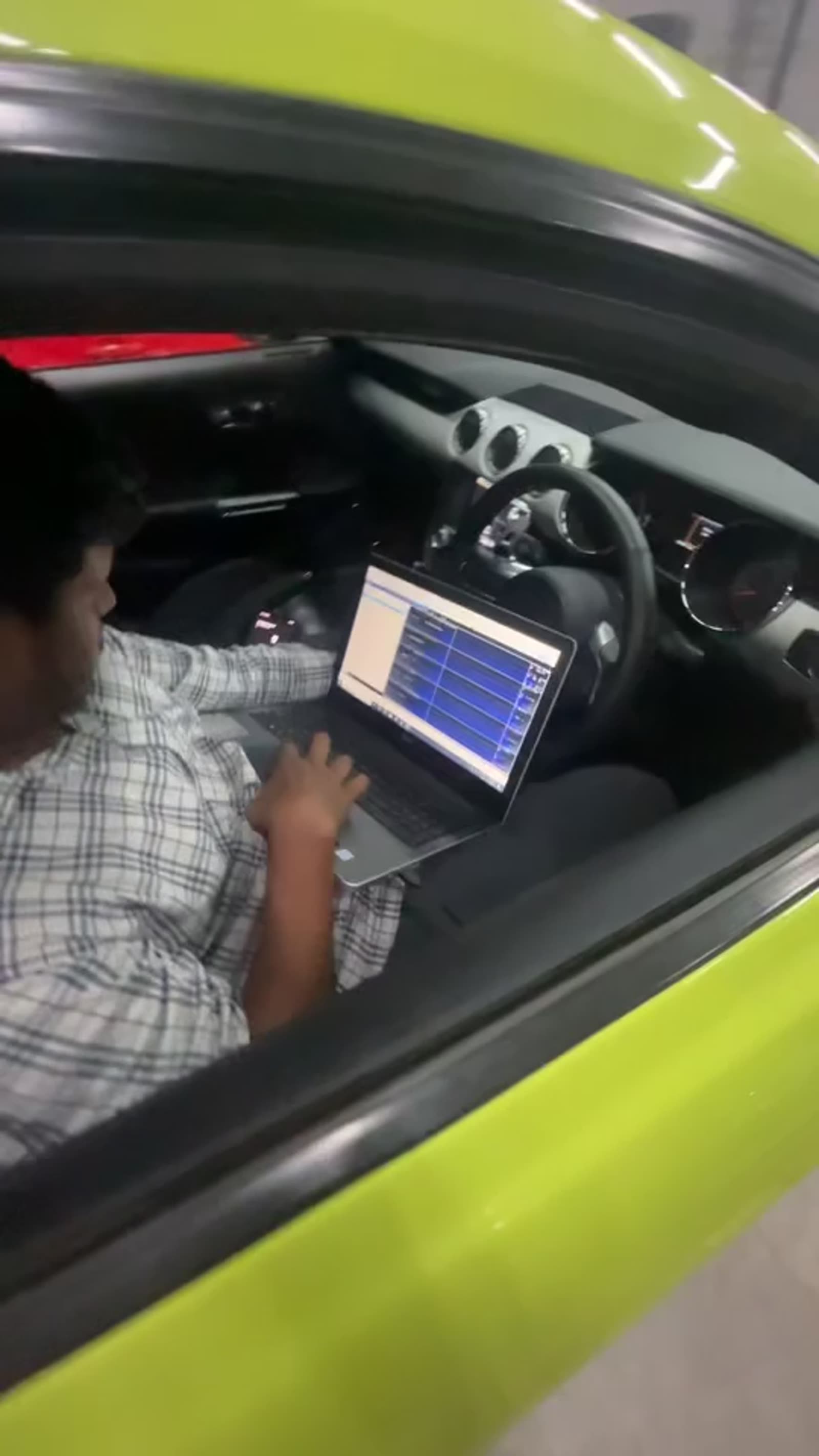
Once the fault is confirmed inside the module, ECM repair is electronics work at board level. We clean corrosion, repair damaged tracks, and replace failed capacitors and driver components rather than discarding the unit.
Most modern modules then need programming — the correct software for that exact vehicle — and coding, which sets the module up for that car's engine, gearbox and options. Where the immobiliser is involved, the module and keys must be paired before the car will start. We finish by clearing faults, checking live data and road-testing the car. Remapping for more power is a different job: that is engine tuning and ECM mapping.
Repair usually wins when the damage is localised — corroded tracks, a failed driver circuit, bad capacitors or a damaged connector. Repair keeps the original module, which already holds the correct software and immobiliser data for your car, avoiding most programming and pairing work.
Replacement is needed when the board is too far gone: heavy corrosion, burnt sections, or a failed main processor. A replacement must be the correct part number, then programmed, coded and paired with the immobiliser before the engine will start.
Availability changes the answer. For older or less common cars, a new module can be hard to source in India, so repair is often the faster route back on the road.
We quote after diagnosis, never before. These factors decide the price:
SNZ Auto Engineering Works is an engine rebuild and repair shop in Wilson Garden, Bangalore, handling ECM diagnosis, board-level repair and programming for petrol and diesel cars, hatchbacks to supercars, including the faults other workshops answer with "replace the ECU". That answer is expensive and often wrong. It is the same discipline behind India's fastest car, built here in Bangalore. If the fault turns out to be mechanical, the same workshop handles car repair and diagnostics in Bangalore and engine work from repair to full rebuild. Cars reach us from across south Bangalore.
Many ECMs can be repaired. Water corrosion, failed capacitors, damaged circuit tracks and burnt output drivers are all repairable at board level. Replacement is only needed when damage is too widespread to restore, such as corrosion across the whole board or a failed main processor. Repair keeps the module's original software and immobiliser data.
You cannot tell from symptoms alone, because a broken ground, chafed harness or faulty sensor produces the same no-start, stalling and misfire behaviour as a failed ECM. Only testing settles it: check power and ground at the module, confirm it communicates, compare live sensor data against what the engine is doing, and verify it is commanding injectors and coils.
Yes. A replacement module must be the correct part number, then programmed, coded for that car's engine, gearbox and options, and paired with the immobiliser and keys before the engine will start. We handle the programming and testing as part of the job.
Diagnosis comes first, because we must prove the fault is in the module before repair starts. Board-level repair, programming, coding and road-testing follow, and the timeline depends on the damage found and on part availability. We give you a date once we have tested the car.
No, not once the fault affects how the engine runs. A car that stalls without warning, misfires or loses power is unsafe in traffic, and wrong fuelling or timing can damage the catalytic converter and the engine. If it stalls or will not restart, have it brought in rather than driven.